
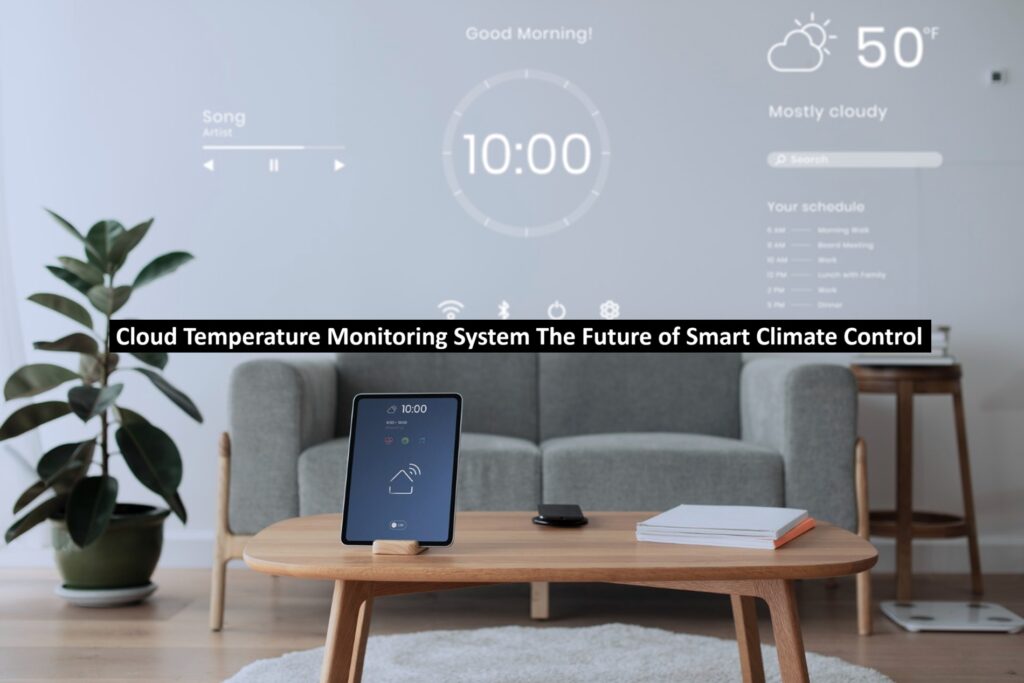

In an era wherein digital transformation touches each element of each day lifestyles, temperature tracking—as soon as a guide, reactive mission—has advanced into an clever, statistics-pushed system. Nowadays businesses and homeowners face increasing needs for power efficiency, safety, and operational visibility. As a result, conventional thermostats and standalone temperature sensors are unexpectedly giving manner to cloud temperature monitoring systems, a new era of climate-manage era constructed on automation, real-time analytics, and far flung accessibility.
Those structures are not sincerely tools for measuring heat. They’re systems that offer non-stop environmental insights, predictive alerts, and seamless connectivity throughout multiple devices and locations. As industries race to optimize performance and reduce operational expenses, cloud-enabled weather control is turning into the spine of clever homes, cutting-edge deliver chains, and linked houses.
This weblog explores why cloud temperature monitoring structures constitute the future of clever climate manage, the advantages they provide, and how they’re reshaping environmental control for both organizations and customers.
What Is a Cloud Temperature Monitoring System?
A cloud temperature monitoring gadget is a network of IoT-enabled sensors that song temperatures (and often humidity, stress, and air excellent) and ship the collected information to a cozy cloud platform. Customers can get right of entry to actual-time environmental conditions from any connected tool—smartphone, pill, or computer—with out being physically gift on the monitored area.
These systems generally encompass:
- Wireless temperature and humidity sensors
- A cloud dashboard for analytics and reporting
- Real-time alerts via SMS, electronic mail, or app notifications
- Facts logging and ancient fashion visualization
- Integration with current HVAC or constructing automation structures
Because sensors transmit data continuously (frequently minute-by means of-minute), users benefit a dynamic, constantly-up to date view of environmental conditions that support higher decision-making
Why Cloud Monitoring Matters: The Shift from Manual to Automated Control
Traditional climate control relies heavily on onsite checks and preprogrammed thermostats. While functional, these methods come with limitations:
- Temperature fluctuations often go unnoticed until damage occurs.
- Manual logs are prone to error and offer little predictive insight.
- Buildings with multiple zones require extensive oversight.
- Remote locations are costly to monitor.
Cloud temperature tracking removes those gaps through providing real-time, centralized control. Whether it’s a pharmaceutical freezer, a greenhouse, a facts middle, or a home HVAC gadget, cloud tracking guarantees conditions remain ideal without the want for bodily presence.
This shift to automated oversight enhances protection, improves efficiency, and decreases the threat of costly disasters caused by overheating, cooling malfunctions, or unexpected temperature swings.
Key Features Driving the Future of Smart Climate Control
1. Remote Accessibility
The ability to check and manage temperature conditions from anywhere is one of the biggest advantages of cloud systems. With just a phone or laptop, users can:
- Verify current temperatures
- Adjust settings
- Respond to alerts
- View long-term trends
This accessibility is in particular treasured for multi-web site corporations—restaurants, warehouses, laboratories—in which centralized oversight saves time and decreases operational complexity.
Read: Enhancing Customer Engagement with Einstein AI in Salesforce Community Cloud
2. Real-Time Alerts and Predictive Notifications
Contemporary cloud systems don’t wait for emergencies; they assume them. If temperatures deviate from secure tiers, signals are sent instantly to particular employees. A few platforms move further by way of reading historical patterns to predict destiny fluctuations, permitting proactive renovation.
These alert systems help prevent:
- Equipment failure in server rooms
- Spoilage of sensitive goods like vaccines or foods
- Heat stress in livestock or greenhouse plants
- Energy overuse in commercial buildings
Predictive alerts contribute to fast response times and increased safety.
3. Records Logging and Compliance Reporting
Many industries—healthcare, prescription drugs, meals carrier—must follow strict environmental regulations.
Cloud monitoring systems mechanically generate historic logs and compliance-prepared reports, getting rid of manual record-preserving and reducing human errors.
These systems:
- Store data securely for years
- Provide downloadable compliance reports
- Offer audit trails with timestamps
- Display insights in charts and graphs
This makes it less difficult for groups to satisfy regulatory requirements together with FDA, CDC, WHO, and meals safety requirements.
4. Energy Performance and Price Discount
Strength intake is a primary cost for each agencies and families. Cloud-based tracking helps lessen waste by way of:
- Optimizing HVAC usage
- Identifying inefficient patterns
- Eliminating unnecessary cooling or heating cycles
- Preventing equipment from running longer than necessary
Over time, these optimizations translate to significant energy savings and lower carbon footprints.
5. Seamless Integration with Smart Ecosystems
Cloud temperature systems naturally integrate with:
- Smart thermostats
- Building automation systems (BAS)
- Smart home speakers
- Security systems
- HVAC control platforms
This interoperability creates a fluid environment where climate control becomes part of an intelligent ecosystem rather than an isolated function.
Applications Across Industries
1. Healthcare and prescription drugs
Clinical refrigerators, vaccine storage, and laboratory environments require strict temperature manipulate. Cloud structures ensure precision and protection, preventing highly-priced losses and ensuring regulatory compliance.
2. Meals and Beverage industry
From bloodless garage warehouses to restaurant freezers, steady temperature tracking guarantees food protection and reduces spoilage.
3. Agriculture and Horticulture
Greenhouses rely on correct environmental manage to preserve perfect growing situations for vegetation. Cloud tracking gives farmers with actionable insights and environmental balance.
4. Statistics centers and Server Rooms
Overheating can reason catastrophic failure. Cloud structures offer non-stop tracking to protect hardware and save you downtime.
5. Retail and business buildings
Cloud monitoring optimizes HVAC systems, reducing typical strength expenses at the same time as improving indoor consolation for personnel and customers.
6. Clever houses
House owners use cloud systems to manipulate air conditioning, heating, and humidity greater effectively. With faraway get right of entry to and automation, domestic weather control becomes extra convenient, comfy, and strength-efficient.
The Future: AI-Driven Smart Climate Automation
As cloud technology evolves, artificial intelligence and machine learning are becoming integral to climate control. The next generation of cloud temperature monitoring systems will offer:
- Adaptive temperature control, learning user habits
- Predictive protection, detecting gadget failure earlier than it occurs
- Dynamic strength optimization, adjusting HVAC settings primarily based on occupancy and climate
- Automated responses, adjusting conditions without user intervention
These AI-enhanced systems will transform climate control from reactive to fully autonomous.
Challenges and Considerations
While cloud temperature monitoring offers many advantages, some challenges remain:
- Ensuring robust cybersecurity
- Maintaining reliable internet connectivity
- Upfront costs for hardware and installation
- Training staff to use new systems
However, the lengthy-term advantages—reduced waste, extended protection, and operational performance—a ways outweigh the preliminary obstacles.
Conclusion: A Smarter, Safer Future with Cloud Monitoring
Cloud temperature tracking systems are revolutionizing how we manage weather control throughout houses, businesses, and industries. supplying real-time insights, far flung access, predictive alerts, and integration with smart ecosystems, those structures offer a level of oversight and efficiency that traditional strategies really cannot healthy.
As AI, IoT, and cloud computing keep to adapt, smart climate control turns into even greater automated, intuitive, and imperative. The future of environmental control is attached, shrewd, and cloud-powered—and those who adopt those systems these days will be fine placed for the next day’s demands.
Author’s Bio:
David William is a qualified content writer with experience in writing on a variety of subjects. He has written a lot of content on Humidity Log, cloud temperature monitoring and wifi temperature monitor services as well.